
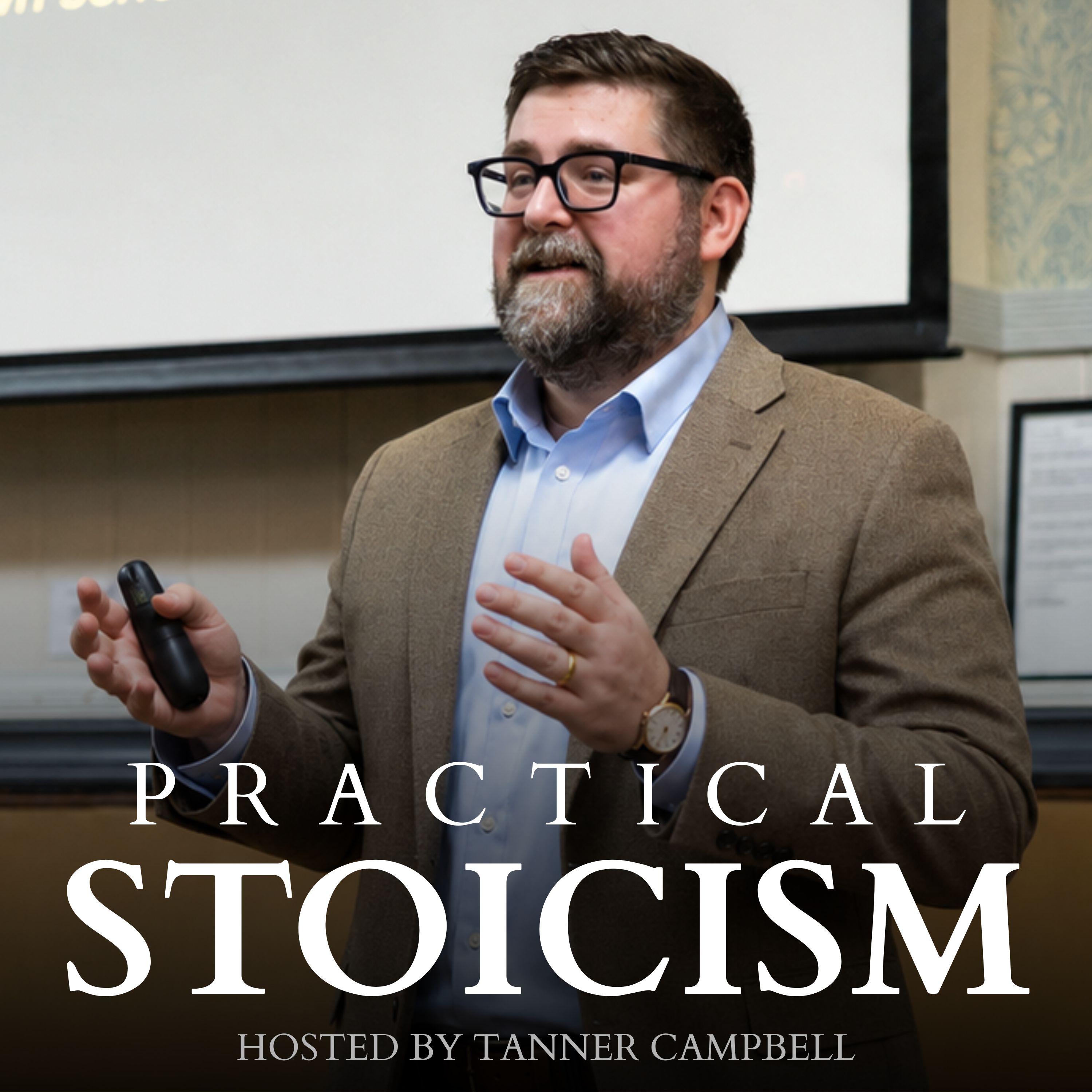
 Site • RSS • Apple Podcasts
Description (podcaster-provided):
Stoicism the pursuit of perfect moral character. If this is not what you understand the objective of Stoicism to be, then you do not understand Stoicism properly. If you would like to understand Stoicism properly, you should join Stoic author and public philosopher Tanner O. Campbell, every week, right here, to explore various aspect of Stoicism from an orthodox, but practical perspective. Practical Stoicism is 100% independently owned, entirely ad-free, and produced by a real live human being who knows what he's talking about.Themes and summary (AI-generated based on podcaster-provided show and episode descriptions):
➤ orthodox practical Stoicism • virtue, justice, roles • anger regulation, parenting, endurance/resilience • decision-making framework • resisting slogans, groupthink, “manosphere” distortions • ethics debates: laws, war, relativism, sex work, AI and purpose • journaling/self-examinationThis podcast presents an “orthodox but practical” approach to Stoicism, treating it primarily as an ethical philosophy aimed at developing moral character rather than as a set of calming techniques or motivational slogans. Across the episodes, the host draws directly from major Stoic sources such as Marcus Aurelius and Seneca, as well as later interpreters like Cicero and Musonius Rufus, using close reading to clarify core Stoic claims about virtue, vice, and moral progress. A recurring theme is the distinction between the unattainable ideal of the Stoic sage and ordinary practitioners who improve through continual self-examination, correction, and repeated practice.
Much of the content focuses on applying Stoic reasoning to everyday pressures—anger, irritability, exhaustion, and the way physical discomfort or depleted “emotional batteries” can impair judgment. The show emphasizes preparation, expectation management, and deliberate recovery as parts of ethical responsibility, especially in roles such as parenting and in navigating difficult people.
Another major thread is Stoic justice and social responsibility. The podcast examines how Stoicism evaluates fairness, law, punishment, public speech, group dynamics, and the ethics of collective conflict, including whether war can be just under a character-centered framework. It also addresses contemporary moral debates—work and purpose in an AI-driven economy, masculinity culture, moral relativism, sex work, and the influence of crowds—using Stoic role ethics and virtue-based tests to assess what action is appropriate. Overall, the focus stays on disciplined judgment: learning to choose well, act justly, and remain oriented toward virtue regardless of external conditions.