 Site • RSS • Apple Podcasts
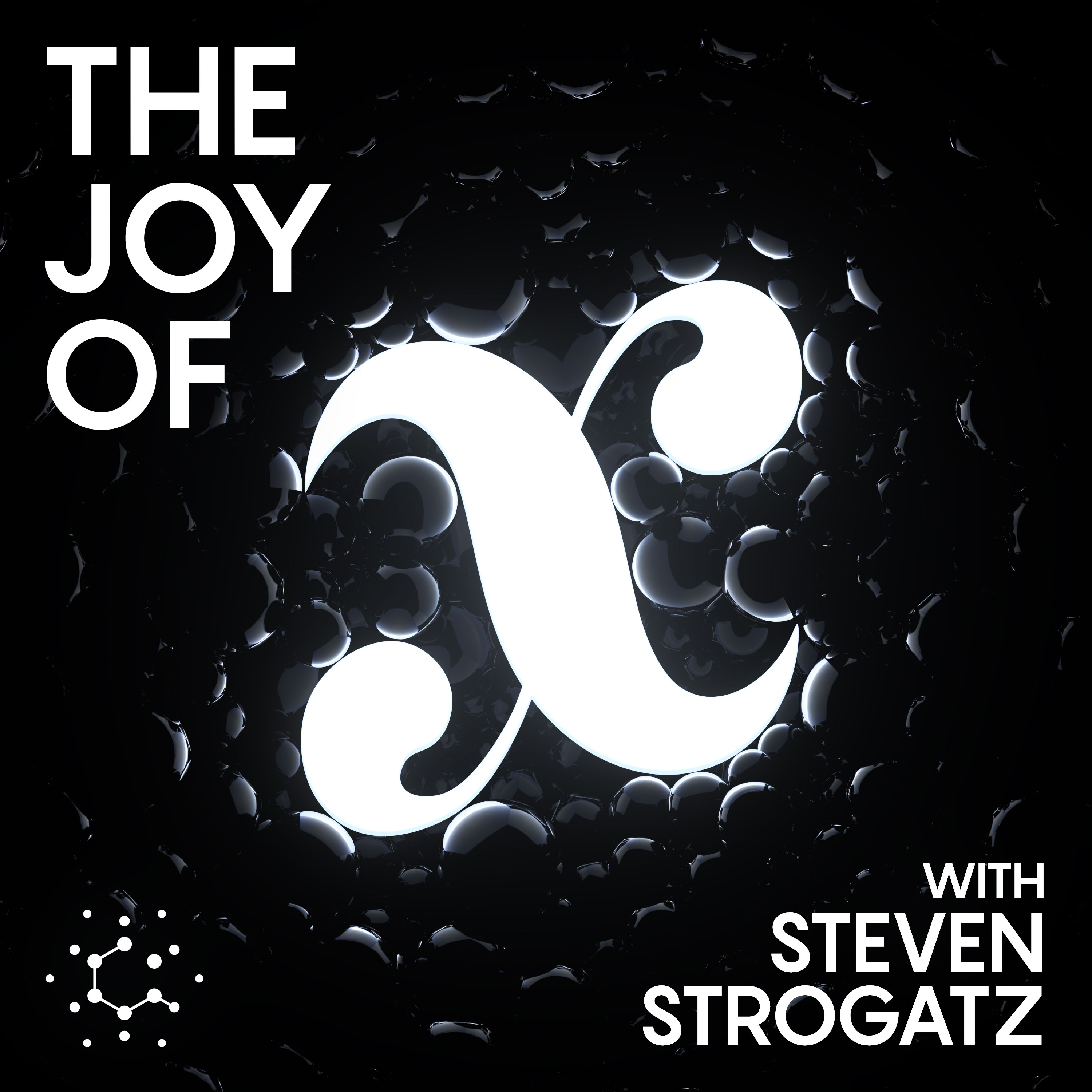
Description (podcaster-provided):
The acclaimed mathematician and author Steven Strogatz interviews some of the world's leading scientists about their lives and work.Themes and summary (AI-generated based on podcaster-provided show and episode descriptions):
➤ scientist interviews • math and physics ideas • neuroscience and genetics • quantum computing and quantum reality • chaos and dynamical systems • cosmology, black holes • biology, evolution, cancer modeling • algorithms, fairness, social justice • careers, creativity, collaborationThis podcast features in-depth conversations hosted by mathematician Steven Strogatz with prominent scientists and mathematicians about both their research and the lived experience of doing science. Across the episodes, guests explain core ideas from their fields in an accessible way, often using concrete examples to show how abstract concepts connect to the physical world and living systems.
A recurring theme is the use of mathematical thinking—modeling, geometry, dynamics, probability and computation—to understand complex phenomena such as neural resilience, anesthesia and brain states, cancer therapies, the collective behavior of insects, and the chemical communication of microbes. The show also explores major questions in physics and cosmology, including quantum reality and quantum computing, the strong force and particle physics, black holes, and efforts to map the universe and probe its origins. In computer science and applied mathematics, discussions include artificial intelligence and the social impacts of algorithms, along with how technical tools can intersect with questions of fairness and democracy.
Alongside the science, guests reflect on creativity, collaboration, career risks, and the challenges of working on problems where answers can be counterintuitive or unpopular. The overall emphasis is on how scientific ideas are developed, tested and communicated, and how personal curiosity and perseverance shape research across disciplines.