Description (podcaster-provided):
chaotically curious. tragically confused. simulated enigma. i write about the thing.
Themes and summary (AI-generated based on podcaster-provided show and episode descriptions):
➤ critical theory on digital culture, influencer ecosystems, and political spectacle • capitalism, consumerism, self-help commodification, narcissism • right-wing radicalization, Trump-era politics, conservative media figures • AI, post-truth, systems of control • Lacan/Deleuze consciousness, identity, desire
This podcast blends critical theory with cultural and political commentary, using contemporary media events and internet subcultures as entry points for broader analysis. Across the episodes, the host frequently frames modern politics as a spectacle shaped by algorithms, influencer economies, and commodified identities, arguing that public discourse often rewards performance, outrage, and “vibes” over coherent principles or material outcomes. Recurring topics include how social platforms and content incentives can accelerate radicalization, flatten debate into consumable entertainment, and encourage narcissistic self-branding.
The show also spends time critiquing prominent figures and institutions in U.S. politics and media—especially right-wing populism, postmodern conservatism, and the ways centrist or liberal punditry responds to them—while emphasizing the psychological and economic forces that make certain narratives attractive. A repeated concern is how capitalism turns hope, spirituality, rebellion, and even self-help into products, eroding a stable sense of self and shared truth.
Alongside political analysis, the podcast draws on thinkers such as Lacan, Deleuze and Guattari, Baudrillard, Debord, and others to discuss desire, identity, consciousness, and agency. Some episodes connect these ideas to technology and AI, focusing on systems of control, post-truth conditions, and how future-oriented techno-utopian stories can obscure present material constraints. The overall approach is essayistic and theory-driven, often treating current controversies, cultural trends, and artworks as case studies for understanding power, meaning-making, and modern subjectivity.
|
Episodes:
|
 The New Radical Centrist
2026-Jan-09
27 minutes
|
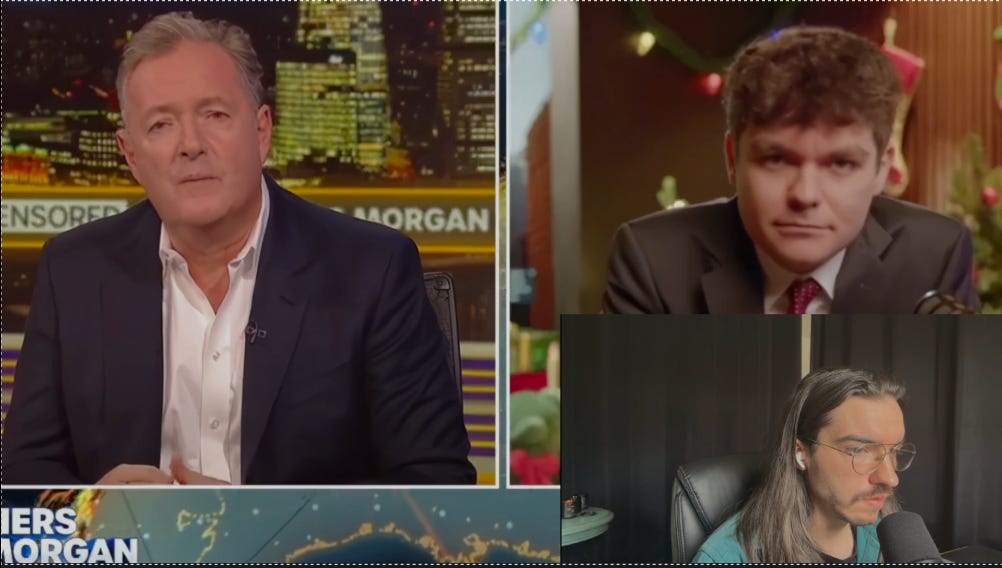 Nick Fuentes on Piers Morgan: Why Fuentes Appeals to Young Men
2025-Dec-12
19 minutes
|
 Leopards eat your face: Trump and Epstein
2025-Nov-14
39 minutes
|
 The pornography of postmodern conservatism
2025-Oct-10
33 minutes
|
 Gospel of Twitter
2025-Aug-18
22 minutes
|
 The false salvation of Tucker Carlson
2025-Jul-16
35 minutes
|
 Peter Thiel is the anti-christ.
2025-Jul-09
31 minutes
|
 LA Protests.
2025-Jun-10
15 minutes
|
 Red Scare: Aesthetics, Nihilism, and Vibes Over Values
2025-Mar-25
52 minutes
|
 The Resignation
2025-Jan-08
22 minutes
|
 The Reckoning for Sam Harris and Liberals
2024-Nov-20
52 minutes
|
 Election 2024 as Political Theater: Are We Voting or Just Consuming? | Jubilee, Joe Rogan, and the Spectacle
2024-Nov-05
41 minutes
|
 I’m Not Your Daddy, But I’ll Be Your Chaos Guide
2024-Oct-28
63 minutes
|
 Consumed by Consumption: The Self-Help Industry & The Erosion of Self
2024-Oct-15
20 minutes
|
 End of History...Rebooted Reality...Meme Activism
2024-Sep-20
45 minutes
|
 The "Hegelian E-Girl Council" and Digital Dialectics
2024-Sep-04
54 minutes
|
 The Conservative Boogeyman: Kevin Roberts
2024-Aug-01
40 minutes
|
 Podcast Daddy
2024-Apr-28
21 minutes
|
 Breaking Down the Alt-right: How Outspoken Extremes Shape Our Culture
2024-Apr-22
27 minutes
|
 Free will, determinism, and consciousness (ft. Sam Harris, Deleuze, and Nietzsche)
2024-Mar-19
12 minutes
|
 Modern magic: the internet and its endless influencers
2024-Jan-28
13 minutes
|
 Deconstructing Arrival and Time: The Hidden Meaning
2023-Nov-16
14 minutes
|
 Deconstructing A Clockwork Orange: The Hidden Meaning
2023-Nov-02
11 minutes
|
 Blueprints of life
2023-Sep-13
19 minutes
|
 Marketplace of overstimulation
2023-Aug-13
15 minutes
|
 plastic perfection | barbie, baudrillard, and beyond reality
2023-Jul-13
11 minutes
|
 AI, AGI, and our society of spectacle
2023-Jul-05
16 minutes
|
 creativity, despair, uncertainty, and other things
2023-Apr-29
18 minutes
|
 Lacan and the Singularity of Romance | The Death of Narratives
2023-Feb-02
28 minutes
|
 Gender Theory and Identity | Responding to Andrew Murnane and the Dualistic Unity Podcast
2022-Dec-19
59 minutes
|
 AI Art, AI, Post-Truth and Systems of Control
2022-Dec-09
35 minutes
|
 Cyberpunk: Systems of Influence, an Evolving Self, and Acts of Rebellion
2022-Nov-19
62 minutes
|
 "The Self is an Illusion" with Annaka Harris and Lex Fridman
2022-Oct-18
28 minutes
|
 Lacan and David Bohm | The unconscious, the self, and a fiction
2022-Sep-20
14 minutes
|
 Exploring the gaps between certainty and uncertainty
2022-Aug-18
15 minutes
|
 Site • RSS • Apple Podcasts